3 min read
Stitching is the detail people notice first when they open your car door. If you are redoing worn seats or upgrading a new vehicle, custom seat stitching lets you change the look of the cabin without changing the seat itself.
Here are the most common styles we sew at Auto Trim Design, and what each one is like to live with in Utah.
Custom Seat Stitching Styles at a Glance
- Diamond (quilted): a raised diamond pattern sewn over a thin foam layer. It gives a high-end, padded look.
- Perforated inserts: small holes punched in the center panels, often paired with seat heaters or coolers.
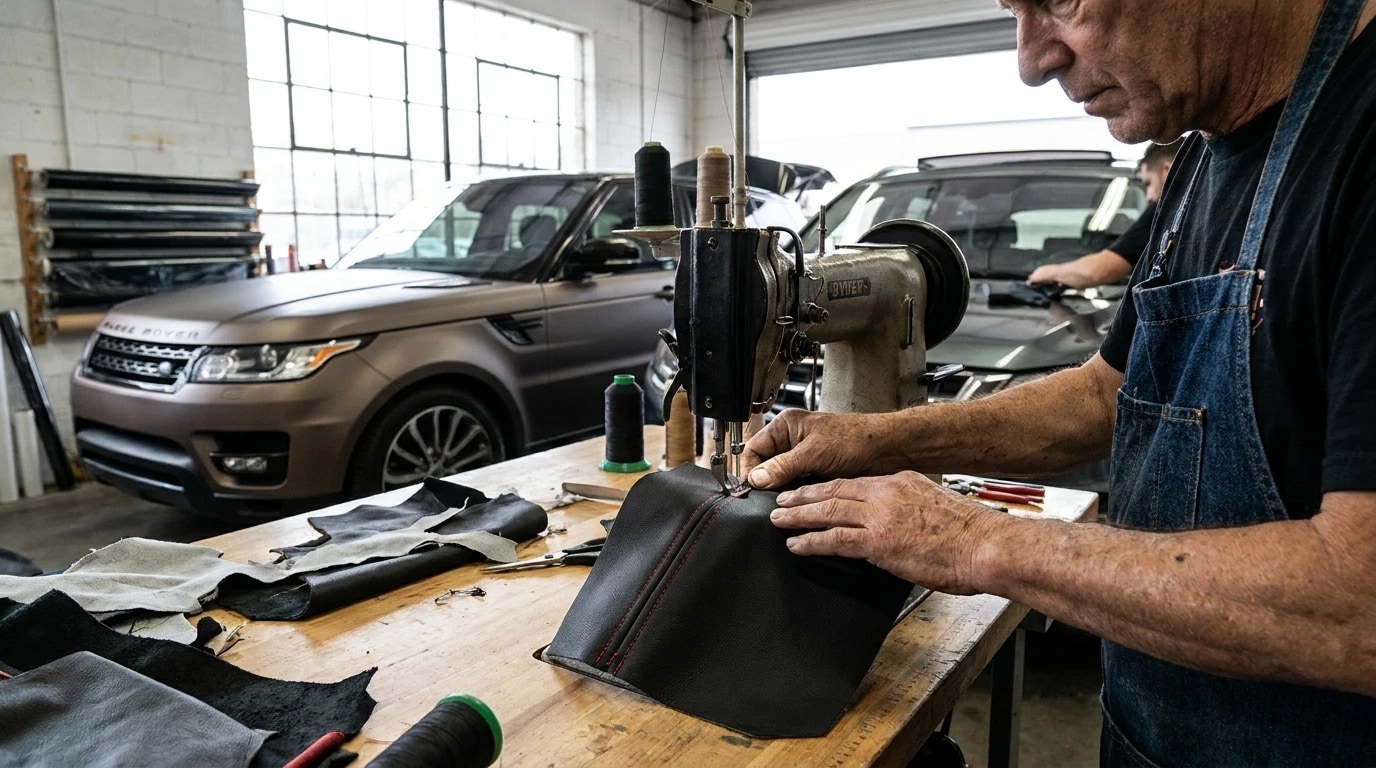
- Contrast stitching: thread in a different color from the leather, such as red on black, to outline the seat panels.
- Double stitching: two parallel rows of thread along the seams, which adds strength and a tailored look.
- Embroidery: a logo or initials sewn into the headrest or seat back.
Diamond Stitching
Diamond stitching works well in trucks and SUVs where the seats are large and flat. The pattern hides minor creasing as the leather ages.
Diamonds can trap dust and road salt in the seams, so plan to vacuum the seat with a soft brush every few weeks during winter.
Perforated Leather
Perforation lets air move through the seat. In a Utah summer that means less sweat on a hot drive, and it lets heated and cooled seats work faster.
We keep perforation to the center panels. The side bolsters take the most wear when you get in and out, and solid leather holds up better there.
Contrast and Double Stitching
Contrast thread is the simplest way to make a plain interior look custom. It costs little more than matching thread because the labor is the same.
Light thread on dark leather shows dirt over time. Gray or a muted color is easier to keep clean than white.
Thread and Material Choices That Last
We use bonded nylon or polyester thread rated for UV exposure. Cotton thread breaks down in sunlight and dry air, and Utah has plenty of both.
For daily drivers we recommend automotive-grade leather or a quality vinyl. Both take stitching patterns well and stand up to cold mornings and hot afternoons. See our leather and vinyl seat care tips for keeping them in shape.
Conclusion: Plan Your Custom Seat Stitching Before You Reupholster
The best time to add custom seat stitching is when the seats are already being recovered, since the labor overlaps. If your seats are torn or worn, read when to repair or replace car seat upholstery first.
Visit our services page or contact us to see thread and leather samples in person and plan your custom seat stitching.
Frequently Asked Questions
How long does custom seat stitching take?
Most full seat jobs take two to four working days, depending on the pattern and whether the foam needs repair.
Can you add stitching to my existing seats?
Usually the seat covers need to be removed and resewn. We can often reuse good leather and add new panels.
Does perforated leather work with heated seats?
Yes. Perforation sits over the heating pad and helps heat reach you faster.