4 min read
Leather and vinyl car seats take a beating in Utah’s dry, sunny climate. Strong sun and low humidity can dry out and fade both materials. A simple care routine helps your seats last longer.
This guide covers the basics of cleaning, conditioning and protecting leather and vinyl car seats. It also explains when it makes sense to ask a professional for help.
Leather vs. Vinyl: What You’re Caring For
Leather is a natural material with a rich feel. It needs regular conditioning to stay supple.
Vinyl is synthetic and handles moisture and stains well. It is easier to clean, but it can still fade and crack in strong sun.
Because the two materials behave differently, they need different products. Always check that a cleaner is made for the material in your car.
How to Clean Leather Seats
Start by vacuuming the seats and seams to lift loose dirt. Then wipe the surface with a slightly damp microfiber cloth.
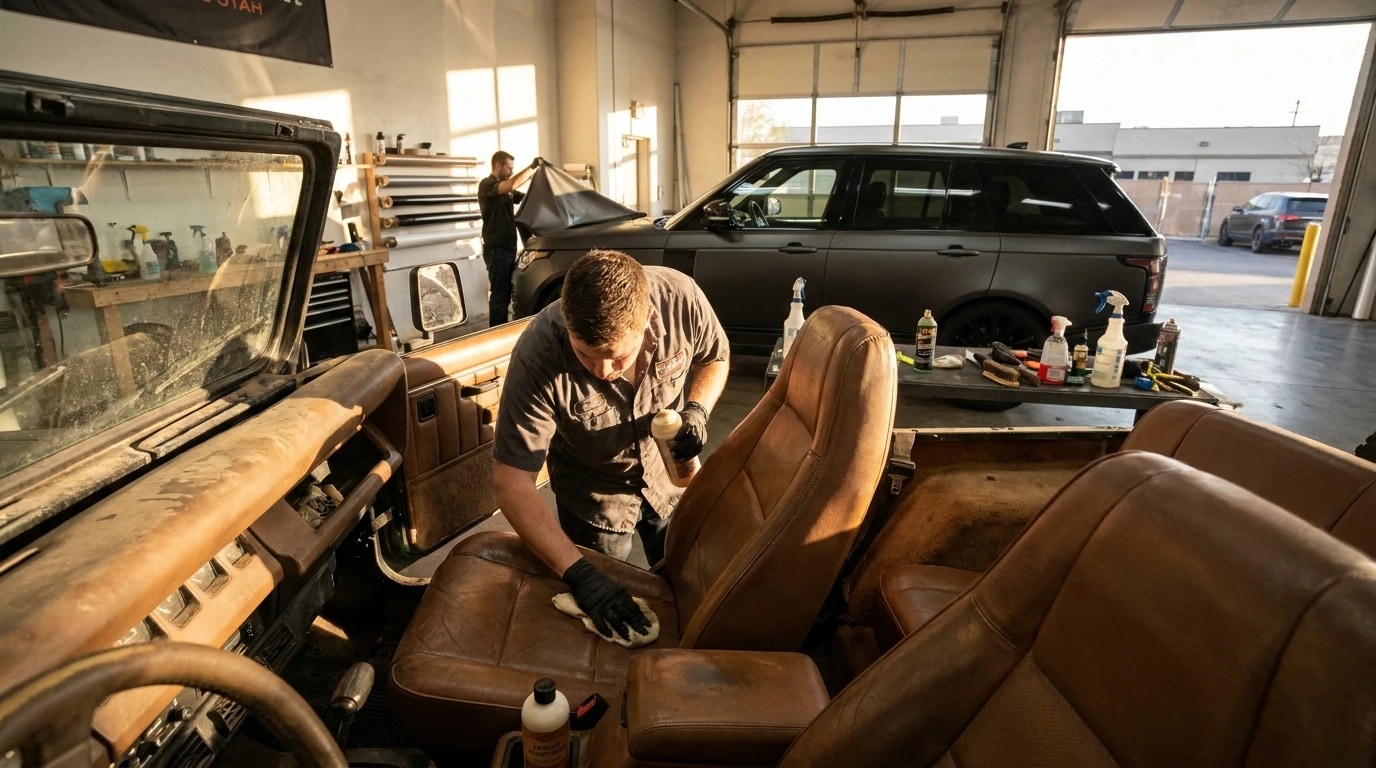
Use a leather cleaner made for automotive interiors. Spray it on the cloth instead of the seat, and work it in with gentle circular motions.
Let the leather air dry out of direct sunlight. Avoid soaking the seats, since water can seep into seams.
How to Condition Leather Seats
Conditioner replaces the oils that dry air and heat pull out of leather. Apply a thin, even coat with a clean cloth.
Let it soak in for about 15 minutes, then buff off any extra with a dry cloth. In a dry climate like Utah’s, conditioning a few times a year is a good habit.
How to Clean and Protect Vinyl Seats
Vacuum first, then wipe the seats with a mild soap and water solution. For ink or grease, use a vinyl cleaner made for that job.
Wipe away any soap residue with a cloth dampened in plain water, then dry the seats with a clean towel.
Finish with a vinyl protectant that includes UV protection. This step matters most in Utah’s bright sun.
Protecting Your Seats From Sun Damage
Ultraviolet light is a leading cause of fading and cracking in car interiors. Parking in shade and using a windshield sunshade both help.
Window tint can also cut down on the sun that reaches your seats. You can read general sun safety guidance from the CDC.
Common Problems and What to Do
Act quickly on spills so they don’t set into the material. Use a cleaner that matches the seat surface.
Small surface scuffs can sometimes be improved with a repair kit. Deep cracks, torn seams and worn-out foam are better handled by a trained upholstery shop.
Explore our car seat upholstery guide and headliner repair guide. If you are unsure what your seats need, Auto Trim Design of Utah can take a look. You can also browse more tips on the Auto Trim Utah blog.
Conclusion
Caring for leather and vinyl car seats does not have to be complicated. Clean them gently, condition leather, and protect vinyl from UV light.
A little regular care keeps your interior comfortable and looking good through Utah’s hot summers and dry winters. If your leather and vinyl car seats need more than a cleaning, reach out to a professional.
Frequently Asked Questions
How often should I clean my leather and vinyl car seats?
A light wipe-down every month or two works for most drivers. Clean sooner after spills or heavy use.
Can I use household cleaners on car seats?
It is best to avoid them. Harsh ingredients can dry out leather and damage vinyl, so choose automotive products.
How do I keep leather seats from cracking?
Clean them gently, condition them regularly and keep them out of direct sun when you can.
Do vinyl seats need conditioner?
Not in the same way as leather. A UV-protectant made for vinyl is more useful.
What if my seats are already damaged?
A professional upholstery shop can look at the damage and advise on repair or replacement.